Catalyst & Metal Recovery XRF Screening
Mail-in laboratory EDXRF testing for catalyst materials, metal-bearing powders, fines, ash, sludge, filter cake, carbide-related materials, and process residues. Submit a single sample or any combination of samples relevant to the process. Results provide elemental information that can support screening, quantitative evaluation, process review, and material comparison.
Common Recovery Applications
Incoming Feed Screening
Compare metal-bearing feeds or unusual lots before processing, acceptance, or more expensive confirmatory analysis.
Process-Stream Comparison
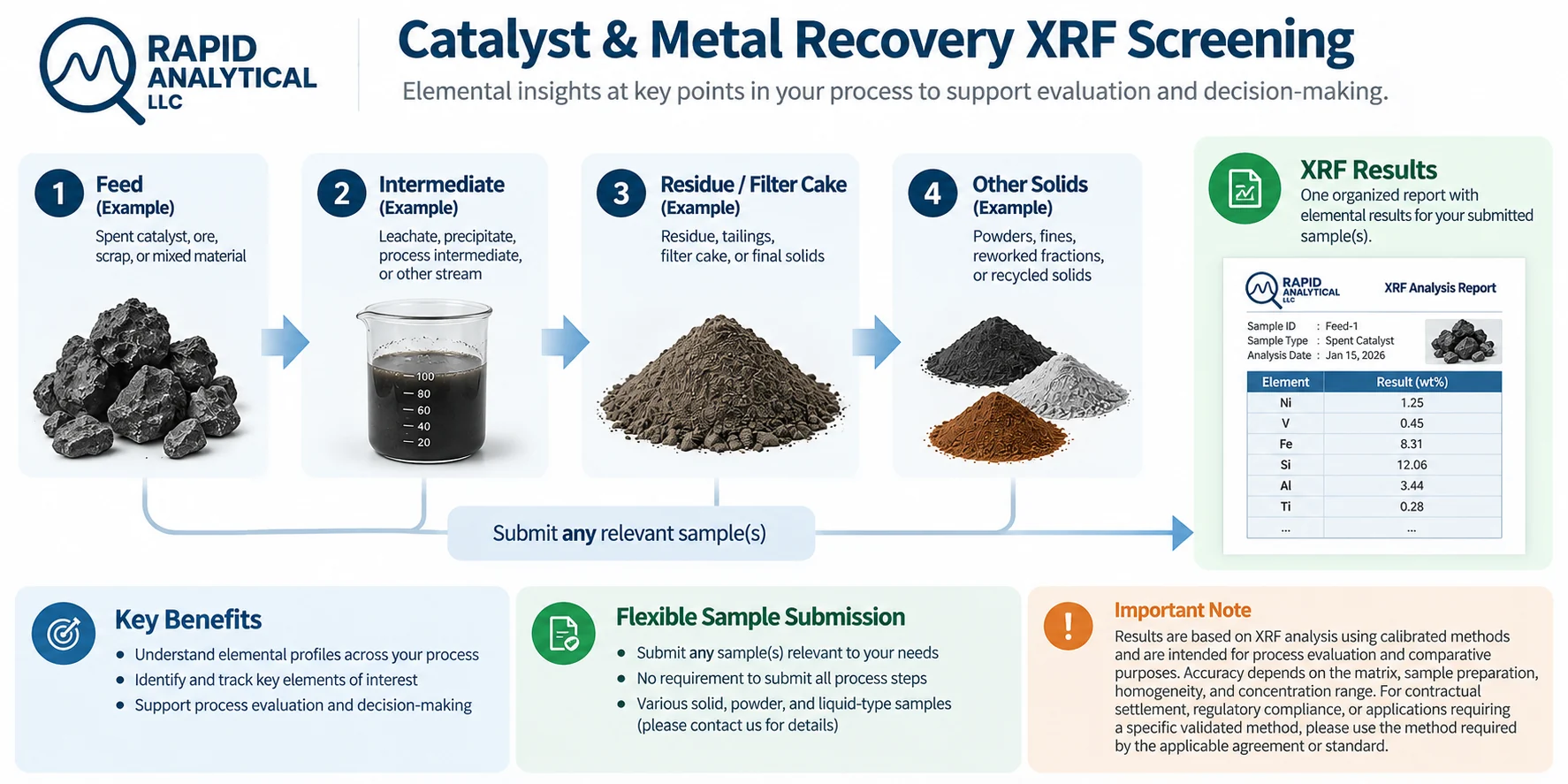
Compare any combination of submitted feed, intermediate, residue, or condition samples. There is no requirement to submit every process stage.
Powders, Fines & Filter Cake
Evaluate prepared heterogeneous materials under controlled laboratory measurement conditions.
Representative Materials
- Spent catalyst powders and fines
- Tungsten/carbide sludge, powder, dust, or residues
- Metal-bearing ash and filter cake
- Baghouse dust and process residues
- Battery/e-waste process solids where the target elements are suitable for XRF
Carbide & W/Co/Ni Recovery Screening
For tungsten-carbide manufacturing scrap, grinding residues, fines, and other suitable nonhazardous recycling streams, elemental screening can help compare W-, Co-, and Ni-bearing materials, incoming lots, or recovery stages. Results depend strongly on matrix, sample homogeneity and calibration. Oxygen, carbon content, WC phase fraction, and contractual metal settlement are not established by a standard screening report.
Before sending sludge, dust, used catalyst, or an unfamiliar waste stream, provide a material description, relevant hazards, expected metals and intended use of the results. Obtain written sample acceptance before shipping.
Analytical Considerations
Quantitative performance depends on sample preparation, homogeneity, matrix, target elements, concentration range, and the selected XRF method or calibration. Application-specific calibration or validation can improve accuracy for suitable programs. When contractual settlement, regulatory compliance, or another application requires a specified validated method, use the method required by the applicable agreement, regulation, or standard. For Pt, Pd, Rh and other target elements, review What Elements Can XRF Detect?. For low-concentration targets and the difference between a screen and a validated limit, see XRF Detection Limits.
Results & Multiple-Sample Projects
Each submitted sample is measured and reported under its own sample ID. A single sample can be submitted by itself, or multiple related samples can be included in one project. When multiple samples are submitted, their results can be recorded systematically within one report for straightforward review. There is no requirement to submit feed, intermediate, and residue samples together.
For batch work, identify each sample by lot, feed, process stage, residue, or condition. Accepted routine samples are $45 each, including multiple lots; customized recurring programs or purchase orders can use a written quote. See Batch & Recurring Testing and Pricing. Obtain written sample acceptance before sending unfamiliar or potentially hazardous streams.