
XRF Metal Analysis
Mail-in benchtop EDXRF elemental analysis for metals, alloys, ingots, shavings, prills, buttons, jewelry components, and other solid metal samples. Rapid Analytical supports screening, comparison, alloy-family evaluation, and material decisions.
Common Metal Samples
Ingots and blocks · Shavings and turnings · Alloys and fabricated parts · Prills and buttons · Jewelry components · Metal-bearing solids
What Metal XRF Can Tell You
Metal XRF can identify the measurable elements in the analyzed region, estimate elemental composition in wt% and/or ppm as appropriate, compare samples, and determine whether an unknown metal is chemically consistent with a suspected alloy family.
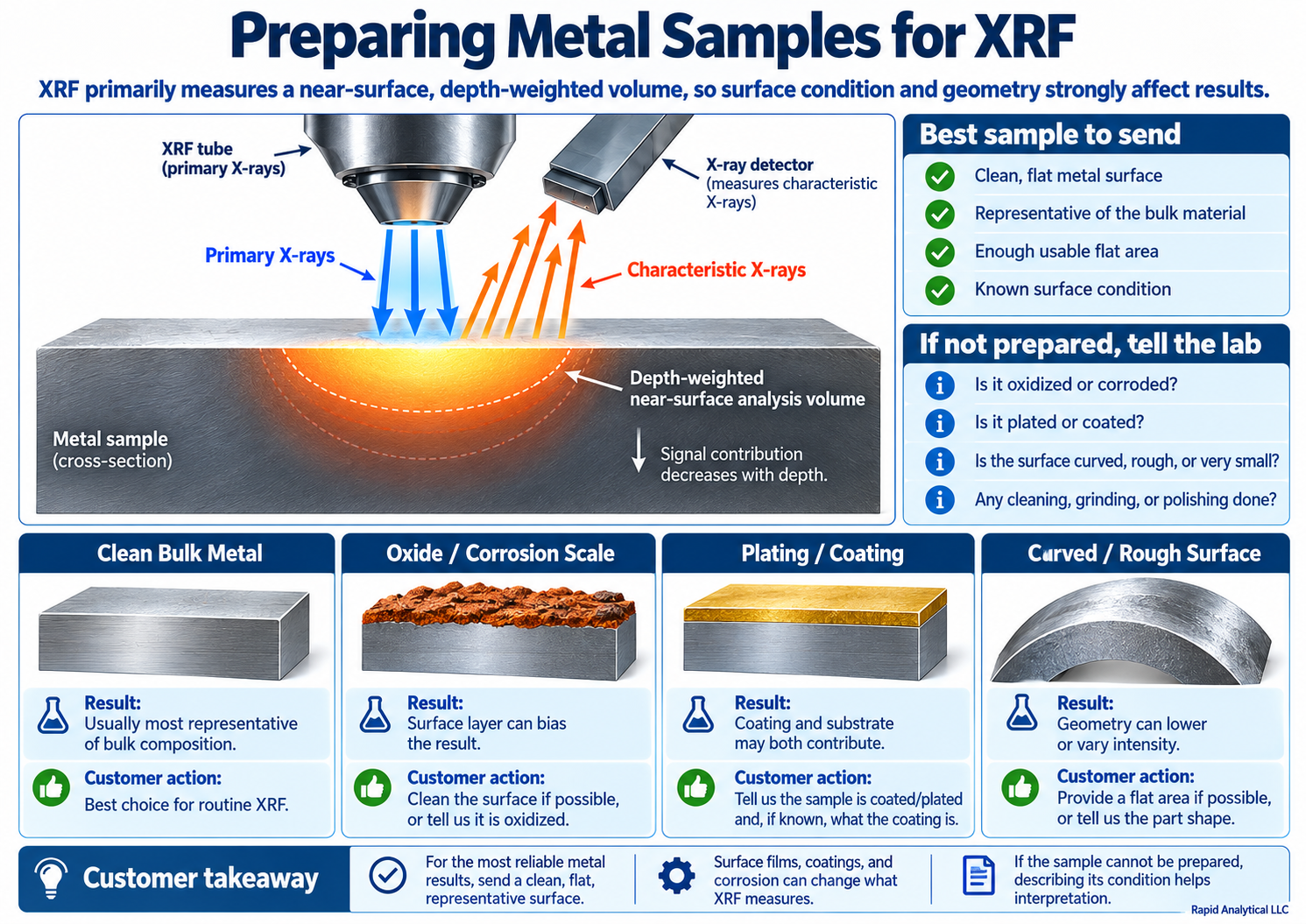
Important: If bulk-metal composition is the goal, a clean, flat, representative surface is preferred. If a coating, plating, oxide, or corrosion layer itself is important, do not remove it before testing—tell Rapid Analytical what should be evaluated.
Sample Requirements
- Shavings or fragments: approximately 1 g is generally sufficient.
- Solid metal: a clean, flat measurement area about 30 mm (1.18 in.) across or smaller is easiest to mount.
- Larger or irregular parts: may still be measurable; send dimensions or a photo before shipping.
- Prills or buttons: a flat, clean surface is preferred.
Related Metal Guidance
For an unidentified solid, see Unknown Material Identification by XRF. For packaging and dimensions, see Sample Submission & Shipping. For method limitations and uncertainty, see the XRF Testing FAQ and How Accurate Is XRF Analysis?.
Testing several samples? See XRF Testing Cost to understand when economical screening may be enough before higher-cost follow-up analysis.