
XRF Sample Preparation for Powders
Powder preparation can strongly affect XRF repeatability and how representative the measured composition is. The goal is a representative, homogeneous powder with consistent particle size, packing, and measurement geometry.
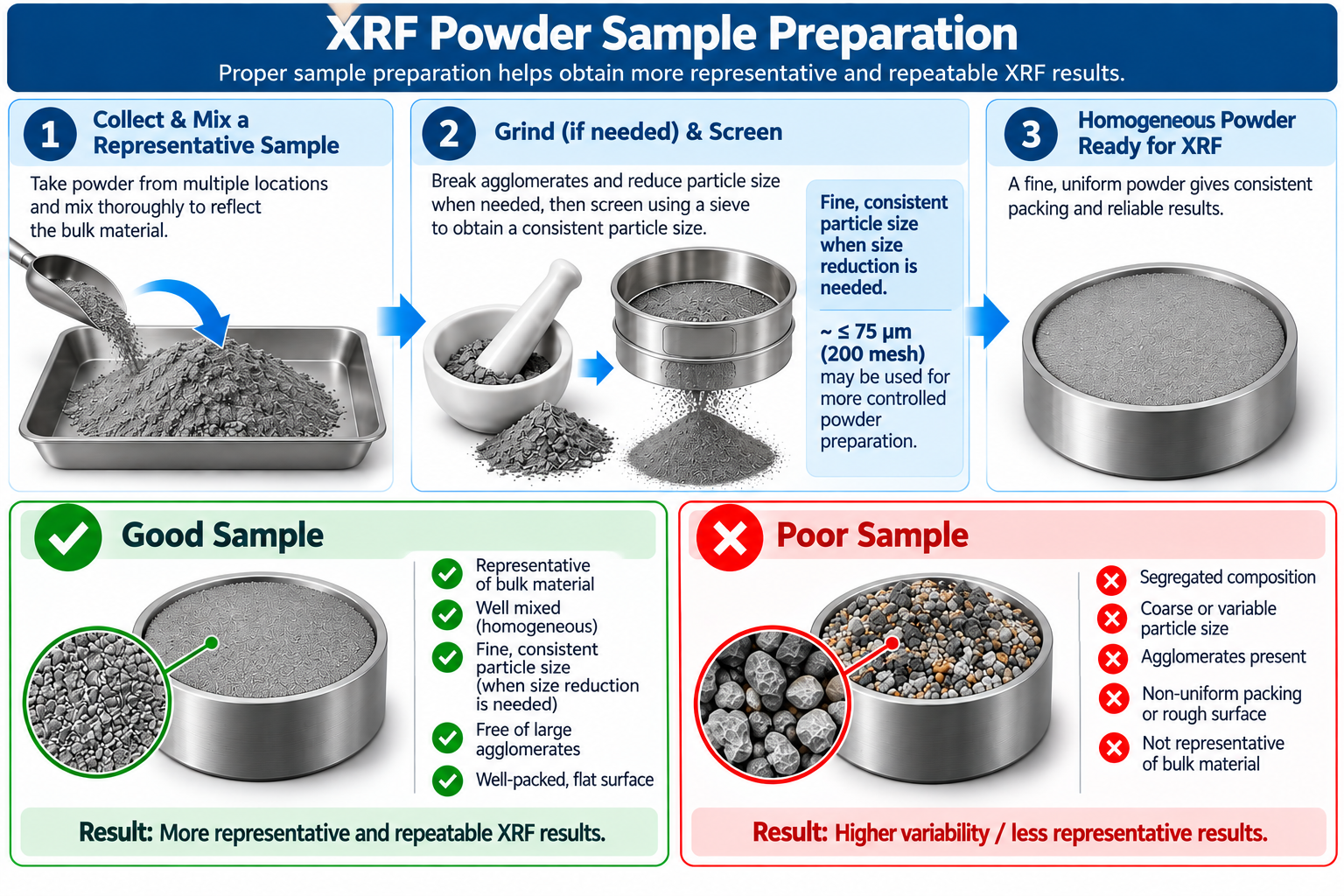
Note: the ≤75 µm (200 mesh) value shown in the graphic is a controlled preparation target that can be useful for some powder workflows; it is not a universal requirement for every XRF sample.
What Matters Most
Representative sampling, thorough mixing, consistent particle condition, and repeatable packing all help improve sample-to-sample consistency. Coarse, segregated, or unevenly packed powders can make the measured portion less representative of the bulk material.
Should the Powder Be Ground?
Not every powder needs milling. For routine screening, a well-mixed as-received powder may be sufficient. When tighter sample-to-sample comparison is needed, reducing large particle-size differences and improving homogeneity can improve repeatability.
What to Send
Approximately 1–2 g is typical for a homogeneous powder. Heterogeneous ores, minerals, or coarse raw materials may require more material for representative subsampling. Send powder in a clean, sealed container and avoid tools or containers that could contaminate the elements of interest.
For shipping and packaging, see XRF Sample Submission & Shipping. For method uncertainty, see How Accurate Is XRF Analysis?. For service details, see XRF Powder Analysis.
Technical reference: XRF training materials from San Francisco State University / FDA emphasize homogeneity, sample preparation, detection range, and calibration model as key quantitative-analysis decisions.
Need help deciding whether XRF fits your sample?
Send the material type, approximate sample count, and what needs to be learned. Rapid Analytical can review method fit before anything is shipped.