XRF vs ICP-OES / ICP-MS for Elemental Analysis
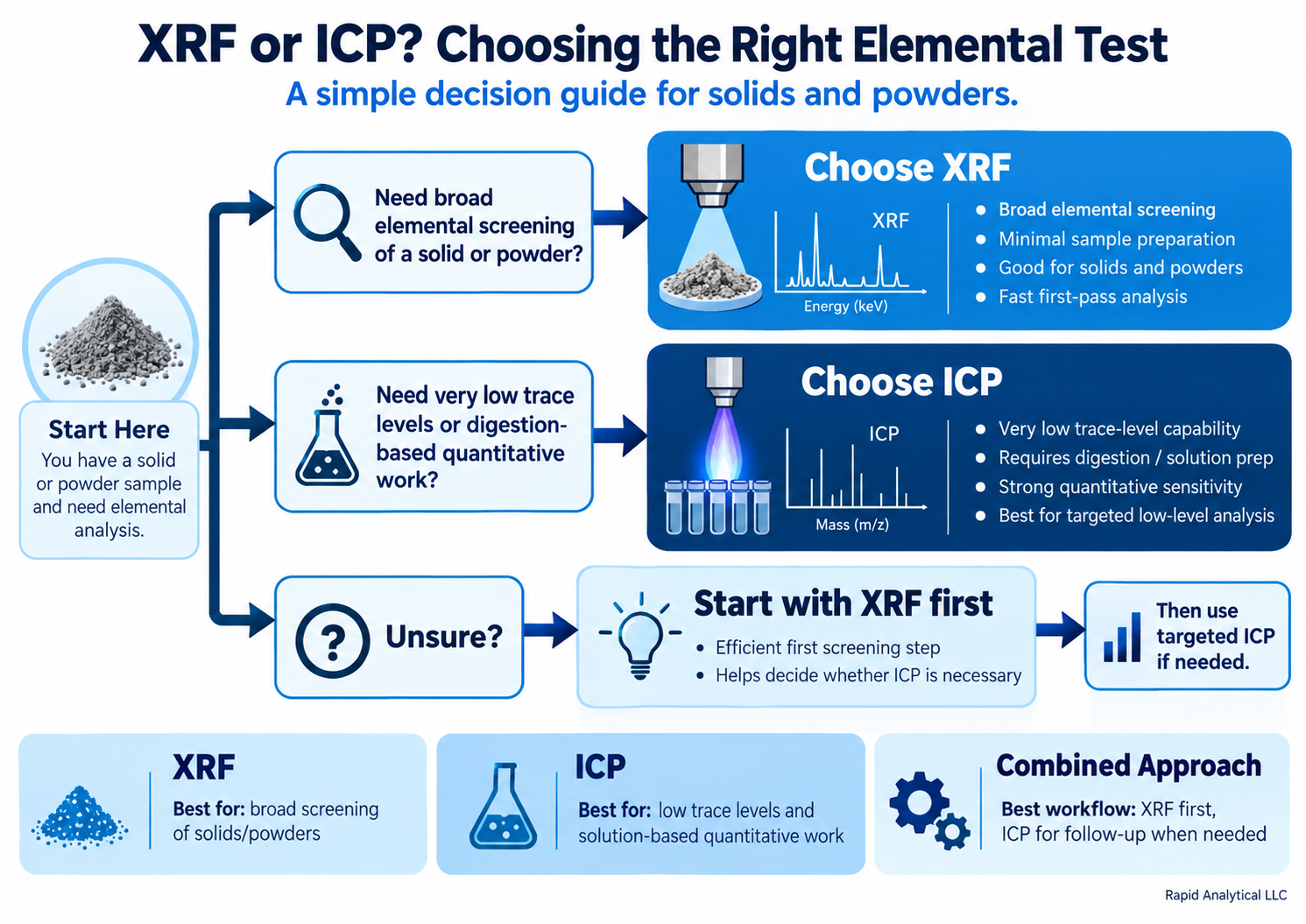
XRF, ICP-OES, and ICP-MS answer different elemental-analysis questions. XRF is often an efficient first step for broad screening of solids and powders, while ICP methods are better suited when very low trace levels or solution-based quantitative analysis are required.
The Key Difference
XRF can often analyze solids and powders directly with relatively little preparation, making it useful for rapid screening and comparison. ICP-OES and ICP-MS generally require digestion or dissolution, but can provide much lower trace-level detection for appropriately prepared samples.
Why the Methods Are Often Complementary
A practical workflow is often to screen samples first by XRF, identify the elements or samples that need closer attention, and then use targeted ICP analysis only where lower detection limits or confirmatory quantification are needed.
Service note: Rapid Analytical provides XRF/EDXRF analysis. If the analytical requirement specifically calls for ICP-OES or ICP-MS, use a laboratory equipped for the appropriate ICP method.
Need help deciding whether XRF fits your sample?
Send the material type, approximate sample count, and what needs to be learned. Rapid Analytical can review method fit before anything is shipped.