
XRF Metal Analysis
Laboratory-based XRF elemental analysis of metals, alloys, industrial components, and metallic raw materials. Applications include unknown metal identification, incoming material verification, supplier comparisons, and investigation of unexpected alloy chemistry. For field alloy sorting versus laboratory analysis, see Handheld XRF vs. Benchtop XRF.
Incoming Material & Supplier Verification
Independent XRF analysis can support purchasing and quality-control decisions when evaluating materials from new suppliers, comparing alternative sources, or investigating unexpected alloy chemistry.
Examples include:
- Comparing the tantalum-to-tungsten ratio in specialty alloy components.
- Comparing chromium, nickel, and molybdenum concentrations in stainless steels.
- Evaluating major alloying elements in nickel- and cobalt-based alloys.
- Investigating suspected material substitutions between suppliers or production lots.
XRF screening can identify significant differences in measurable elemental composition but does not independently establish full alloy specification compliance.
Common Metal Samples
Ingots and blocks · Shavings and turnings · Alloys and fabricated parts · Prills and buttons · Jewelry components · Metal-bearing solids
What Metal XRF Can Tell You
Metal XRF can identify the measurable elements in the analyzed region, estimate elemental composition in wt% and/or ppm as appropriate, compare samples, and determine whether an unknown metal is chemically consistent with a suspected alloy family.
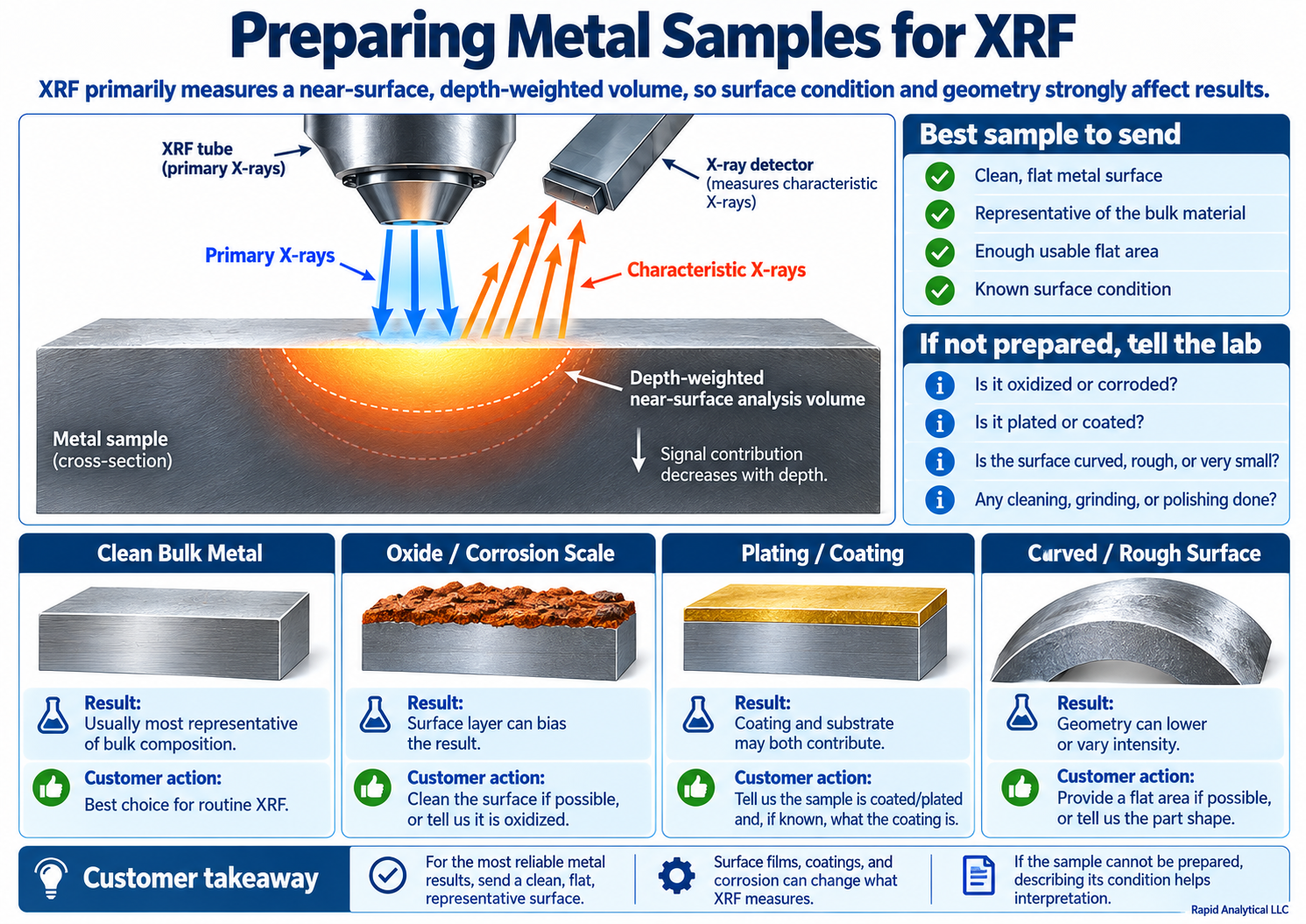
Important: If bulk-metal composition is the goal, a clean, flat, representative surface is preferred. If a coating, plating, oxide, or corrosion layer itself is important, do not remove it before testing—tell Rapid Analytical what should be evaluated.
What Are You Trying to Find Out?
Example: An unknown metal rich in Fe, Cr, and Ni may be chemically consistent with a stainless-steel alloy family; that does not, by itself, certify a specific stainless grade. The standard Rapid Analytical report is intended for elemental screening and comparison, not accredited composition certification.
Sample Requirements
- Shavings or fragments: approximately 1 g is generally sufficient.
- Solid metal: a clean, flat measurement area about 30 mm (1.18 in.) across or smaller is easiest to mount.
- Larger or irregular parts: may still be measurable; send dimensions or a photo before shipping.
- Prills or buttons: a flat, clean surface is preferred.
Related Metal Guidance
For an unidentified solid, see Unknown Material Identification by XRF. For packaging and dimensions, see Sample Submission & Shipping. For method limitations and uncertainty, see the XRF Testing FAQ and How Accurate Is XRF Analysis?. For the sample submission process, see Mail-In XRF Testing. For analyte selection, see What Elements Can XRF Detect?; for low-level impurity questions, see XRF Detection Limits.
Testing several samples? See XRF Testing Cost to understand when economical screening may be enough before higher-cost follow-up analysis.